Sewer Line Repair & Replacement in Grand Junction, CO
An irrigation-fed yard in Orchard Mesa can hide a sewer failure under hard high-desert ground. One phone call gets the line inspected, repaired, or replaced with the excavation plan matched to the property.
Plan
The right visit for the job
Older homes around Orchard Mesa and downtown Grand Junction often start with an inspection, then move to spot repair when the rest of the sewer line remains structurally sound.
Quote
A straight quote
The exact quote is given on the call, based on line condition, access, excavation, materials, distance, and time on site.
Time
A visit time
The visit time is set on the call after the property, symptoms, and access conditions are reviewed.
Sewer work in Orchard Mesa, the Redlands, downtown Grand Junction, and North Avenue properties often means tracing lines through irrigated ground, older yards, slabs, or tight side access. The work may involve a sewer camera inspection, localized repair, backup response, or full line replacement after the failure point is identified.
Services
Sewer Line Repair & Replacement Services in Grand Junction
Grand Junction homes commonly have sewer lines crossing established yards, irrigation-influenced soil, slabs, and older utility routes. In Orchard Mesa and the Redlands, roots and hard ground can complicate excavation. Downtown properties and Mesa County commercial sites may also require careful access planning, camera work, and flow control before repair or replacement is chosen.
Residential sewer repair
Residential lines in Orchard Mesa, the Redlands, and older Grand Junction blocks are checked for breaks, root growth, settlement, and recurring backups.
Sewer backup repair
A Grand Junction sewer backup needs the flow problem traced before cleanup or digging, especially where irrigation ground obscures the service route.
Sewer camera inspection
Camera inspection shows where a line is cracked, blocked, offset, or collapsed beneath a Grand Junction yard, slab, or driveway.
Root intrusion removal
Roots can enter aging sewer joints in Grand Junction neighborhoods, then catch paper and waste until the obstruction is removed and the pipe assessed.
Trenchless sewer replacement
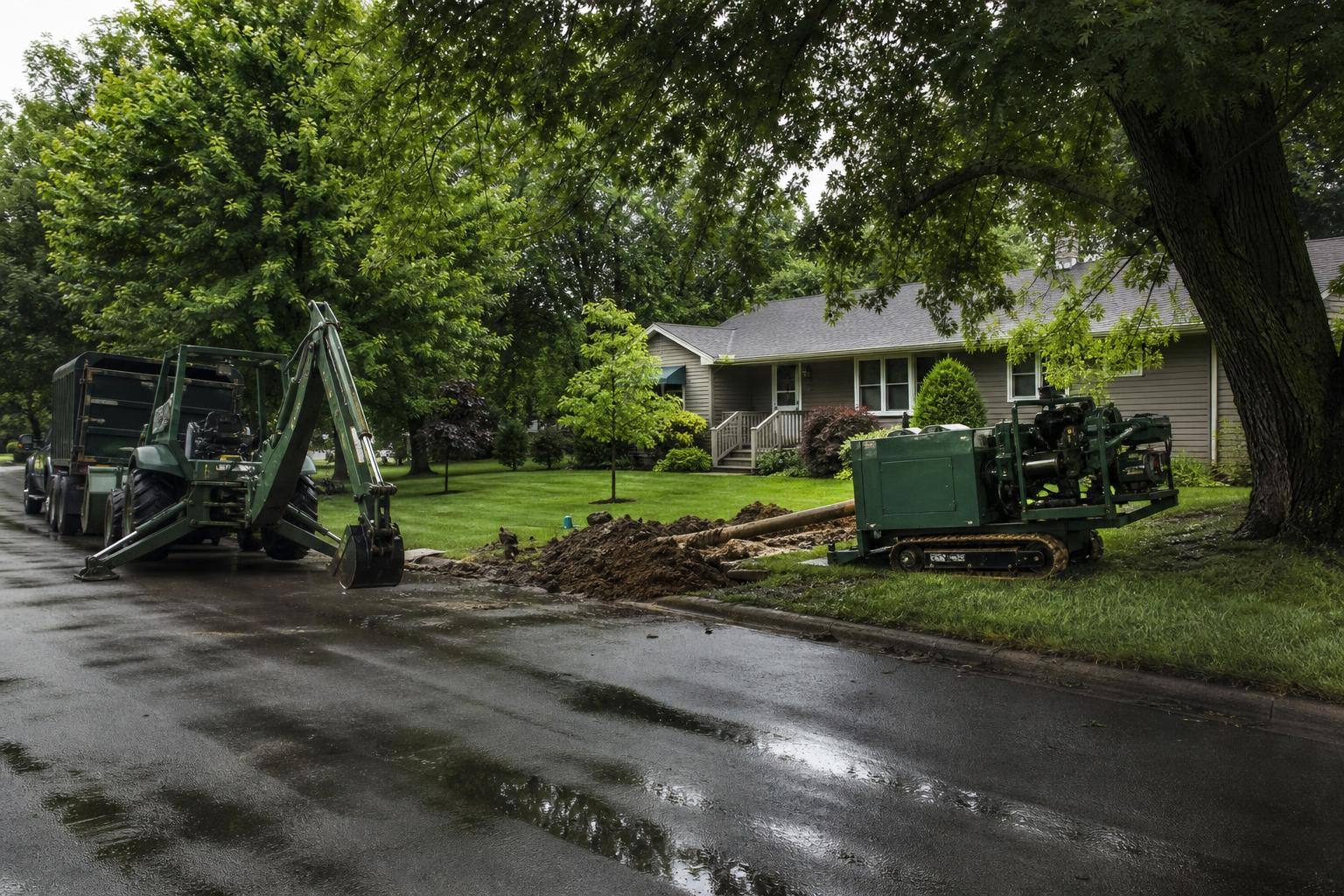
Where the route and soil conditions allow, trenchless replacement can limit disturbance to established Grand Junction landscaping, driveways, or irrigated yards.
Commercial sewer repair
Commercial sewer repair in Grand Junction may involve larger flows, shared lines, paved access, and work coordination around Mesa County business properties.
Main line replacement
Main line replacement addresses a substantially failed run serving a Grand Junction home, building, or connected property when isolated repair will not hold.
Sizes
Sewer Line Repair & Replacement Options Available in Grand Junction
For many Grand Junction homes, the practical starting point is an inspection because hard soil, irrigation routes, and older buried piping can conceal the actual failure. The findings determine whether a spot repair is enough or a line replacement is justified.
| Size | Dimensions | Good for |
|---|---|---|
| Sewer Line Inspection | A technician examines accessible sewer piping and identifies likely blockage, damage, or failure points. | An inspection fits recurring backups in downtown Grand Junction, Orchard Mesa, or the Redlands when the visible symptoms do not show whether roots, breaks, offsets, or collapse are responsible. |
| Localized Sewer Repair | A damaged section is repaired when the surrounding line remains structurally serviceable. | A spot repair suits a damaged section beneath a Grand Junction yard or driveway when the surrounding sewer line remains structurally serviceable and excavation can reach the affected area. |
| Sewer Line Replacement | A substantially failed sewer line is replaced using an appropriate open trench or trenchless method. | Line replacement fits a substantially failed sewer run in Grand Junction, including older residential routes or commercial lines where repeated blockages and structural damage make isolated repairs impractical. |
Which option fits common Grand Junction projects
| Project | Size | Why |
|---|---|---|
| Recurring home backup | inspection | Camera work identifies whether roots, an offset joint, or collapse is driving backups in established Grand Junction residential lines. |
| Orchard Mesa root damage | spot repair | A spot repair can address one damaged section while leaving sound pipe in place beneath an irrigation-influenced yard. |
| Collapsed yard line | line replacement | A collapsed run usually needs replacement when flow cannot pass and the surrounding pipe has lost structural support. |
| Downtown rental property | inspection | An inspection separates a building-side blockage from a buried line failure before disruptive work is selected. |
| Mesa County business line | line replacement | A substantially failed commercial line may require replacement after flow demands, access, and the full route are assessed. |
Schedule Grand Junction sewer help
Click Here to Call (888) 206-2089Cost
What Affects Sewer Line Repair & Replacement Cost in Grand Junction
The quote is given on the call after the sewer symptoms and property conditions are discussed. Cost depends on the type and size of the job, parts and materials, time on site, distance from Grand Junction, access, excavation conditions, and after-hours work.
To avoid surprise charges, describe the backup history, known cleanouts, property access, irrigation lines, and previous repairs during the call. The quote is set after those conditions and the needed work are understood.
Line condition
Cracks, offsets, root intrusion, blockages, and collapse change whether the work is an inspection, spot repair, or full line replacement.
Access and distance
A long route from Grand Junction, narrow side yards, slabs, driveways, irrigation features, and hard ground can change labor and excavation requirements.
Parts and materials
The required pipe, fittings, access components, repair materials, and trenchless equipment depend on the failed section and the selected repair method.
Site time
Time on site changes with flow conditions, digging, utility coordination, restoration needs, commercial activity, and after-hours sewer work.
What goes in
Types of Work We Handle
Sewer Backups
Backups include wastewater rising at fixtures or cleanouts and may point to a blocked or failed sewer line. Grand Junction homes with older buried routes can need camera inspection before digging.
Damaged Sewer Lines
Cracked, offset, crushed, or separated sewer lines are evaluated for repair or replacement. Hard Mesa County ground and driveway crossings can affect how the damaged section is reached.
Root Intrusion
Roots entering pipe joints can restrict flow and trap waste. In Grand Junction yards with established trees and irrigation, removal should be followed by an assessment of the pipe itself.
Not accepted
Do not place grease, wipes, feminine products, paper towels, chemicals, paint, medicines, or other nonflushable material into the sewer, and routine drain cleaning does not cover a failed buried line.
How to protect your home in Grand Junction
Protect the cleanout
Keep access covers visible and avoid landscaping, storage, or vehicles over the cleanout and suspected sewer route.
Stop extra water
Limit fixture use during a backup so additional wastewater does not enter a line that may already be blocked.
Mark irrigation lines
Point out irrigation valves, buried tubing, and altered landscaping before excavation begins in a Grand Junction yard.
Gather repair history
Have prior camera findings, digging, root treatments, backups, and known pipe repairs ready for the call.
Keep pets inside
Secure pets and keep people away from standing wastewater, open excavations, equipment, and exposed piping.
Projects
Sewer Line Repair & Replacement for Different Projects
Residential Sewer Line Repair
Residential repair covers damaged buried lines beneath Grand Junction yards, driveways, slabs, and older home additions where the failed section can be isolated.
Commercial Sewer Line Repair
Commercial repair in Mesa County considers larger flows, paved surfaces, shared lines, business access, and the need to keep the affected area controlled.
Sewer Backup Sewer Line Repair
Backup repair traces the restriction before selecting work, which matters in downtown Grand Junction properties where several drain paths may meet below the building.
Root Intrusion Sewer Line Repair
Root intrusion repair addresses the entry point and pipe condition in established Grand Junction landscaping, rather than treating repeated blockage as a stand-alone drain problem.
Collapsed Pipe Sewer Line Repair
A collapsed pipe can stop flow entirely and require excavation or another suitable method, especially beneath hard ground, driveways, or developed Mesa County lots.
Trenchless Sewer Line Repair
Trenchless work may suit selected Grand Junction routes where access, pipe alignment, soil conditions, and the replacement method support less surface disturbance.
Main Line Sewer Line Repair
Main line repair covers the larger buried run serving a Grand Junction home or building when repeated failures extend beyond a fixture branch.
How it works
How Sewer Line Repair & Replacement Works in Grand Junction
Call For Sewer Help
Describe the backup, odors, slow drains, cleanout activity, property location, and any known irrigation or utility routes around the work area.
Inspect The Sewer Line
A technician examines accessible sewer piping and identifies likely blockage, damage, or failure points before the repair method is selected.
Approve The Repair Plan
The findings, work type, access needs, excavation approach, and exact quote are reviewed before the repair or replacement proceeds.
Restore Proper Flow
The selected work addresses the failed section and restores usable sewer flow, with the work area handled according to the approved plan.
Weather in Grand Junction
Grand Junction heat can dry and harden excavation areas, while winter freezes complicate digging and exposed piping. Flash flooding can saturate or wash across a work area, and irrigation season may affect access, soil stability, and the placement of equipment.
Work area access
The work may reach a line through a crawl space, basement, utility room, slab, yard, or driveway. Grand Junction properties with narrow side yards, irrigation routes, mature landscaping, hard ground, buried utilities, or shared access can limit where equipment and excavation are placed.
Permits
Sewer Line Repair & Replacement Permits and Placement Rules in Grand Junction
Access rules
Work on private property may need local approval or an inspection when excavation affects a public sidewalk, street, right of way, or other public area. The City of Grand Junction is the place to ask about street placement. During the call, the permit or inspection responsibility and arrangements can be reviewed.
Landlord and HOA requirements
Mesa County subdivisions, covenants, HOAs, and landlords may set rules for digging, driveway use, landscaping restoration, equipment placement, or tenant access. Check those requirements before work if the property is governed by them.
What the work area needs
Clear a path to the suspected line, cleanouts, shutoffs, crawl spaces, basements, and utility rooms. Keep parking available for the work vehicle, secure pets and people, identify irrigation and utilities, and account for frozen or saturated ground.
Timing
Seasons, Weather and the Best Time to Call in Grand Junction
Sewer problems in Grand Junction can surface any time, but winter freezes, spring moisture, irrigation season, and summer heat change excavation conditions. Backups after heavy runoff may need faster assessment, while established landscaping and hard soil can make warmer-season access more involved.
Winter freezes and access
Frozen ground can make excavation harder around Grand Junction homes, while exposed work areas need protection from freezing conditions. Identify indoor access, crawl spaces, and shutoffs before the visit is set.
Irrigation season and flooding
Irrigation routes and flash flooding can saturate or obstruct a yard, especially in Orchard Mesa and other developed areas. Keep the suspected route clear and explain recent water movement during the call.
Discuss a Grand Junction sewer issue
Click Here to Call (888) 206-2089Service area
Sewer Line Repair & Replacement Areas We Serve
Service covers central Grand Junction, downtown, North Avenue, Orchard Mesa, the Redlands, and surrounding Mesa County properties. Nearby service discussions can also include Palisade, Basalt, Avon, Silverthorne, and Golden when the job location and dispatch details are reviewed.
Grand Junction is part of our Mesa County coverage, and we also serve the neighboring communities below.
Why us
Why Call a Sewer Line Repair & Replacement in Grand Junction?
Grand Junction sewer work is shaped by high-desert ground, irrigation-influenced residential lots, winter freezes, and sudden runoff. The repair plan has to account for what lies above the pipe, not just the blockage shown at a fixture.
In Orchard Mesa, the Redlands, downtown properties, and Mesa County commercial sites, sewer routes may cross mature landscaping, slabs, driveways, or narrow access points. Inspection first can prevent a full excavation when one section is still structurally sound.
FAQs
Sewer Line Repair & Replacement FAQs
How much does sewer line repair cost in Grand Junction?
Sewer line repair cost in Grand Junction depends on the job type and size, pipe condition, parts and materials, time on site, distance, access, excavation, and after-hours work. The exact quote is given on the call after the backup history and property conditions are reviewed.
Which sewer visit fits my Grand Junction home?
A sewer line inspection usually fits when the cause is unclear, a spot repair fits one damaged section with sound surrounding pipe, and line replacement fits a substantially failed run. Older homes in Orchard Mesa and downtown Grand Junction often benefit from inspection before digging.
How soon can sewer help come to Grand Junction?
The visit time is set on the call after the symptoms, property location, access, and urgency are reviewed. Explain whether wastewater is rising, whether fixtures are unusable, and whether the problem is affecting a home, rental, or commercial site.
What does Grand Junction sewer line repair cover?
Sewer line repair covers inspection, localized repair, or replacement of a failed sewer line, including problems involving backups, roots, breaks, offsets, or collapse. The work area may be inside a utility space, beneath a slab, or outside in a yard or driveway.
What is not covered by sewer line repair?
Sewer line repair does not cover putting wipes, grease, chemicals, paint, medicines, or other nonflushable material into the sewer, and routine drain cleaning is not a substitute for repairing a failed buried line. Describe connected drain symptoms so the problem can be separated.
Does Grand Junction sewer work need a permit or inspection?
It may need local approval or inspection when work affects a public street, sidewalk, right of way, or other regulated area. The City of Grand Junction can explain street placement requirements, and the permit question can be reviewed during the call.
How should I prepare my Grand Junction property?
Clear access to cleanouts, suspected piping, shutoffs, crawl spaces, basements, and utility rooms. Keep parking available, secure pets, identify irrigation lines and buried utilities, and move vehicles or stored items away from the likely work area.
Can hard ground affect sewer repair in Grand Junction?
Hard high-desert ground can affect excavation effort, equipment placement, and the practical repair method. Irrigation may soften or saturate parts of a yard, while winter freezing and flash flooding can change access and soil conditions.
When is sewer line repair busiest in Grand Junction?
Sewer work can be busy during winter freezes, spring runoff, irrigation season, and periods following heavy water movement. Summer heat can harden exposed ground, so describe recent weather, irrigation, flooding, and landscaping conditions when arranging the visit.
Can roots damage sewer lines in Grand Junction yards?
Roots can enter aging joints and restrict flow in Grand Junction yards, especially around established landscaping. Root removal may relieve the blockage, but the pipe should be assessed because an open joint or damaged section can allow the problem to return.